Showing posts with label Landscape Surgery. Show all posts

Tuesday, 4 June 2019

Landscape Surgery: GeoHumanities Creative Commissions 2018

This post was originally published on the Landscape Surgery blog of the Social, Cultural and Historical Geography Research Group in the Department of Geography at Royal Holloway, University of London. Landscape Surgery is a fortnightly seminar series that the SCHG hosts during term-time. Sessions are typically organised around a theme for which speakers (including external invitees) talk about their research, followed by questions/general discussion on the topic; though it can also include workshops and research training sessions. I attend the sessions as part of my PhD activities, and am one of four editors of the Landscape Surgery blog.

The session discussed in this post featured the Royal Holloway Centre for the GeoHumanities Creative Commissions from 2018. I co-wrote and edited this piece with Alice Reynolds, another PhD student in the Department of Geography at RHUL.

--------------------------------

For the penultimate Landscape Surgery of the academic year, we were delighted to be joined by two guest speakers. Jol Thomson (PhD student at the University of Westminster) and Dr. Julian Brigstocke (Lecturer in Human Geography in the School of Geography and Planning at Cardiff University) joined us to discuss their work as part of Royal Holloway’s Centre for the GeoHumanities Creative Commissions, funded by the Leverhulme Trust and AHRC, and last year organised around the theme of ‘Creating Earth Futures’. Five works were selected for the 2018 programme, three of which we were introduced to in the session. Full details about all of the selected works are available on the Centre for the GeoHumanities’ blog.

First up to present was Jol Thomson discussing ‘In the Future Perfect’, the commissioned work he developed alongside Julian Weaver, an artist at Finetuned Ltd. Jol and Julian’s project seeks to interrogate the imaginaries and implications of scientific work operating in the realm of pataphysics: that which examines imaginary phenomena existing in a world beyond metaphysics; outside the basic principles of existence. In this regard, their work explores the discourses and materialities of nuclear fusion and its implications for energy provision and climate change.

Jol explained that the cultural imaginary around this branch of scientific experimentation and technological development has so far only existed in the future perfect, with fusion consistently projected over the past century to be ‘30 years away’ from being a viable power source. Decades of fusion experiments have faced continued difficulties in containing the reaction in a manner requiring less energy than the amount that can be extracted.

To develop their creative research, Jol and Julian sought to gain access to The Culham Centre for Fusion Energy, the UK’s national nuclear fusion research laboratory located in Oxfordshire, as well as visiting the ITER Centre in Marseille, an internationally-recognised experimental site for nuclear fusion. One of the most significant observations the pair have made during their research at both sites is the scale of infrastructure needed to make fusion reactions possible. Jol illustrated using maps and photographs how the UK’s Culham Centre is situated close to both a power station and solar field, and also draws on sources of energy from further afield to function. Meanwhile, it was explained by Jol that for fusion to be viable as a source of energy, research has shown that humans would need to mine off-world to recover the minerals needed to create adequate conditions for fusion to occur, which are rare to find on earth.

Even aside from these very practical limitations to the fusion process, Jol hypothesised what would happen if humans could harness the unlimited, self-sustaining energy that nuclear fusion promises. It has been projected that population levels could eventually become so high that our impacts as humans would become devastating to the earth’s ecosystem and ultimately be unsustainable, undermining the ‘green’ credentials of fusion as a method of energy production. In considering what the legacy of fusion energy could look like millennia into the future, Jol and Julian have been inspired by the film Into Eternity, which explores ideas about how a nuclear waste site in Finland could be marked as hazardous for future inhabitants of Earth, who are unlikely to communicate using the same languages we do today.

Both film and sound recording have been employed by the pair to interrogate the atmospheres and energies that permeate today’s nuclear fusion testing sites. In the session, Jol played sound files that audibly represented what takes place inside a tokamak test reactor, where a magnetic field confines the heated plasma used in nuclear fusion experiments, suggesting that him and Julian could eventually score this sonic output for a choir as a performative piece. Through the process of transforming these scientific operations into visual and sonic outputs, their work demonstrates both the elusive and ethereal qualities of current fusion experiments, and the level of imagination necessary to make nuclear fusion as a power source a tangible reality.

Following Jol, Dr. Julian Brigstocke gave a presentation titled ‘Thinking in Suspension: The Geoaesthetics of Sand’. His presentation introduced his collaborative project ‘Harena’, which he works on alongside Victoria Jones, an installation artist exploring the ways humans use their senses to connect with and create a sense of place. Their creative collaboration investigates the contemporary politics of sand mining through a series of experiments with the material properties and cultural experiences of sand.

For Julian, sand is both a vital substance and display of power. It connects the elemental to the global; marks time, decay and death; and as the primary component of concrete, cement, glass, fibreglass, asphalt, microchips and more, is the most important constituent material of our urban landscapes. Despite being a finite natural resource which takes centuries to form, it is the world’s most consumed resource after air and water, and humans are using it at accelerating rates, particularly in construction (Morrow, 2018). In 2014, the UN Environmental Program declared that sand mining was causing “unequivocal” environmental problems (ibid).

In this regard, Julian made particular reference to Hong Kong, where sand extracted from seabeds has provided the material for land reclamation, at the cost of catastrophic damage to marine ecosystems. While land reclamation projects appear to promise a quick fix to endemic housing shortages in one of the world’s most densely populated urban areas, political debates rage around how far these projects go towards reducing Hong Kong’s vast inequalities in wealth; where the sand itself comes from; why existing brownfield sites are not used instead; and government collusion with private property owners and developers.

As well as carrying out fieldwork in Hong Kong and visiting sand mines in the UK, Julian and Victoria’s work has delved into the sensual and material properties of sand through a series of ‘experiments’ that explore its qualities of suspension. Julian recounted his unsettling experience of a sensory deprivation tank, where participants lie face up on a pool of water warmed to body temperature and containing a high proportion of salt in suspension, enabling them to lose all sense of the body’s external boundaries. Elsewhere, him and Victoria visited an anechoic chamber, which prevents users from hearing anything inside it, as an exploration of the silence that suspension in air entails; while indoor skydiving allowed them to perceive how tiny adjustments in bodily weight can cause significant directional movements when bodies are suspended in air. In thinking about these processes of attunement with various environmental and atmospheric conditions – of drifting, disorientation and movement across earth, water and air – Julian was reminded of a quotation from Michel Serres (1982: 83): “nothing distinguishes me ontologically from a crystal”.

Julian ended his presentation with a provocation central to the joint political and cultural territory of his and Victoria’s project. He asked: how might the granular thinking necessary to understand the properties of sand pollute the contemporary noisy landscapes of consumerism, for example in the concrete, glass and asphalt landscapes of Hong Kong?

To conclude the session, we were presented with a film by Matterlurgy (Helena Hunter and Mark Peter Wright) made in collaboration with filmmaker Daniel Beck, entitled ‘Rehearsals for Uncertain Futures’. Featuring Royal Holloway’s Department of Geology’s Sea Ice Simulator (SIS), used in climate science to predict and model the impact of black carbon on ice reflectivity, the film emphasises the create commission project’s broader emphasis on noticing (Tsing, 2015). Focusing on the polyphonic dimensions of environmental processes and methods of observing them, “[s]uch an inquiry finds its roots through interleaved theories of listening […] and the practices of performance and fictioning. It considers the vibratory, affective and speculative forms of agency bound within the technologies and practices produced by GEC [Global Environmental Change]” (Hall, 2018).

Heavily featuring the work and daily practices of Professor Martin King (Professor in Environmental Geoscience in the Department of Earth Sciences at RHUL), the film never once features Professor King’s full body or face, but instead focuses on the materiality of the shipping containers situated in the woodland where the SIS is stored, the bird song in the background and the diverse sounds produced by the SIS machinery.

“The film focuses on the interconnections between the lab and field amplifying physical and material production practices behind climate simulation and predictive data modelling. How does data become data, where exactly is the field, what practices of maintenance and care does simulation require?” (Helena Hunter, no date).

The film is just one part of a broader project which seeks to produce a series of artworks which “challenge and re-imagine how GEC is both sensed and non sensed, signalled and signed, heard and unheard” (Hall, 2018).

We would like to extend our thanks to Jol and Julian for joining us in the session, and to Helena and Mark for allowing us to view their film. We look forward to seeing how the projects develop.


Bibiography

Hall, L. (2018) Matterlurgy selected for the Creating Earth Futures Commissions. Available at: https://www.crisap.org/2018/01/22/matterlurgy-creating-earth-futures-commissions-2018/ (Accessed: 14 May 2019)

Hunter, H. (no date) Rehearsals for Uncertain Futures. Available at: http://www.helenahunter.net/rehearsals-for-uncertain-futures (Accessed: 27 May 2019)

Morrow, S. (2018) 20 Things You Didn’t Know About… Sand. Available at: http://discovermagazine.com/2018/jun/20-things-you-didnt-know-about–sand (Accessed: 27 May 2019)

Serres, M. (1982) Hermes: Literature, Science, Philosophy. Baltimore, MD: The John Hopkins University Press.

Tsing, A. (2015) The mushroom at the end of the world: On the possibility of life in capitalist ruins. Princeton: Princeton University Press.


Monday, 6 May 2019

Landscape Surgery: The Digital Libidinal City, Part 2 - Jack Lowe


I originally wrote and published this post on the Landscape Surgery blog of the Social, Cultural and Historical Geography Research Group in the Department of Geography at Royal Holloway, University of London. Landscape Surgery is a fortnightly seminar series that the SCHG hosts during term-time. Sessions are typically organised around a theme for which speakers (including external invitees) talk about their research, followed by questions/general discussion on the topic; though it can also include workshops and research training sessions. I attend the sessions as part of my PhD activities, and am one of four editors of the Landscape Surgery blog.

The session discussed in this post was organised around the theme of 'The Digital Libidinal City', with a presentation by Alfie Bown on how desire is mediated in the smart city, followed by responses from myself and Megan Harvey. Thanks to Alice Reynolds for editing this post.


---------------------------------------------------------

In responding to Alfie Bown’s observations on desire in today’s digitally-mediated cities, which comprised the first part of this Landscape Surgery session on The Digital Libidinal City, Jack Lowe used his discussion to focus on the relationships between digital technology and experience more generally within everyday urban life.

While much of the early scholarship on digital technology in the humanities and social sciences lauded the possibilities and dangers of ‘cyberspace’ and ‘the information age’, Jack proposed that the ‘digital turn’ in these disciplines arrived at a ‘sweet spot’ in academic exchanges. The critical scholarship of the 80s and 90s gave us the tools to dissect the representational power of digital media, while postmodern and post-structural approaches have helped us to make sense of the agency that digital media have within wider processes of societal function and everyday life. In particular, with the move since the turn of the millennium towards thinking about materialities and the post-human, research into digital technology has helped us become more aware than ever of how our lived experiences are shaped by our relationships with material things. Ultimately, Jack argued, this enables us to understand digital technology in context – as one agent within a wider field of human and non-human agents that assemble during our everyday experiences.

Turning to Alfie’s example of Pokémon GO, Jack discussed how studying this widely-played mobile game is useful for thinking about the geographical relationship between play and everyday life. While existing studies of the game’s geographies have largely focused on how the gameplay has changed practices of navigation, sociability and embodiment in cities (e.g. Evans and Saker, 2019; Apperley and Moore, 2019), much of the research on Pokémon GO focuses on what the game was like during the craze of summer 2016, despite the game having changed significantly since then.

Most impactfully, players have since been able to participate in raids, a very popular activity in which groups of players gather in designated locations at particular times, working together to defeat powerful Pokémon and ultimately capture them. Jack contended that geographers could fruitfully employ techniques of rhythmanalysis (Lefebvre, 2004) to examine how the desire to get a strong Pokémon influences the timelines of those participating, and their relationships with other players, non-players and their environment. For it is this intersection between the rhythms of everyday life and the timescales of raids where the game has often had the greatest impressions on the everyday experiences of players (and non-players), provoking users previously unknown to each other to organise themselves using social platforms outside the game, change their routines, interact with the mundane events happening at the raid location, and develop intimate connections (memories of past raids and friendships formed, knowledge of signal strength, etc.) with the locations in which raids take place.


Raid battles in Pokémon GO are time-limited events where players must group together to defeat powerful Pokémon


In relation to Alfie’s discussion of dating and food delivery apps, Jack drew connections with geographer James Ash’s (2015) work on interfaces. Ash’s research has explored the digital media used by payday loans providers, for example, examining how the affective qualities of app design features such as sliders and buttons can purposefully alter users’ experiences of them (Ash et al., 2018). Nonetheless, Ash and other interface scholars have been keen to emphasise that the ways these digital products are designed and used do not amount to straightforward manipulation, with the qualities of the experience depending on a number of contingent factors. Indeed, many people will be familiar with having used commercial websites owned by large companies that are frustrating to navigate; and accessing any digital services can always be curtailed by technology failures, or simple lack of affordability (e.g. of smartphones).

Furthermore, Jack emphasised the need to be nuanced in thinking about the different kinds of desire that can be fostered through various types of digital products. Not all apps and games are intended to foster, or result in fostering, deliberate patterns of consumption or generation of data for commercial and/or surveillance purposes. For example, media artists such as Blast Theory have experimented with these platforms to evoke experiences that question the ethics and affordances of digital technologies, as well as the social relationships that are mediated by them. Desire itself is a concept that encompasses a wide range of affective relationships that could be harnessed, for example, towards artistic, community-building and health-improving ends using digital media, and some could even provide methods of potentially subverting capitalist forces mediated by these technologies. Jack accepted, however, that such goals are always hindered by the detachment we experience from the working conditions through which digital products are made, and the lack of clarity regarding the ethics of how they are used.

To make sense of these nuances, Jack advocated for the value of ethnographic and autoethnographic research into the everyday geographies of digital media, so that we might perceive how they affect our lives at the level of experience (Duggan, 2017). Notably, he highlighted the need for more practice-based research in this area, where academics are actively involved in creating products using digital tools. This process can enable researchers to identify how each of their design decisions, as well as the affordances of the technologies used, influence the outcomes of the product being made for individual and collective experiences. In doing so, such research could potentially reveal the level at which these design decisions and technological affordances impact on our everyday behaviours.

Jack finished his response by drawing together three key questions that geographers might consider in relation to experience in digitally-mediated cities:

  • How can we as geographers critically examine the ways digital technology affects our everyday experiences and behaviours, both theoretically and methodologically?
  • How is power distributed in different kinds of digitally-mediated experiences, and what roles do space and place play in these relationships of power?
  • In line with aiming to adequately contextualise the production and experience of digital technology, how would we study and interpret digitally-mediated relationships in societies in the Global South, or across diverse communities of people more generally?

This post is Part 2 of a three-part series based on The Digital Libinal City session. Part 1 featured Alfie Bown’s presentation on desire and digital media in contemporary urban life. Part 3 concludes the series with Megan Harvey’s discussion of the psychoanalytic dimensions of desire and its relationship with capitalist reproduction, dreamwork and subversion in the digital sphere.


References

Apperley, T. and Moore, K. (2019) “Haptic ambience: Ambient play, the haptic effect and co-presence in Pokémon GO” Convergence: The International Journal of Research into New Media Technologies25(1): 6-17.

Ash, J. (2015) The Interface Envelope: Gaming, Technology, Power. New York and London: Bloomsbury.

Ash, J., Anderson, B., Gordon, R. and Langley, P. (2018) “Digital Interface Design and Power: Friction, Threshold, Transition” Environment and Planning D: Society and Space 36(6): 1136-1153.
Duggan, M. (2017) “Questioning “digital ethnography” in an era of ubiquitous computing” Geography Compass 11(5). DOI: 10.1111/gec3.12313

Evans, L. and Saker, M. (2019) “The playeur and Pokémon Go: Examining the effects of locative play on spatiality and sociality” Mobile Media & Communication 7(2): 232-247.

Lefebvre, H. (2004) Rhythmanalysis: Space, Time and Everyday Life. London and New York: Continuum.

Monday, 29 April 2019

Landscape Surgery: The Digital Libidinal City, Part 1 - Alfie Bown


I originally wrote and published this post on the Landscape Surgery blog of the Social, Cultural and Historical Geography Research Group in the Department of Geography at Royal Holloway, University of London. Landscape Surgery is a fortnightly seminar series that the SCHG hosts during term-time. Sessions are typically organised around a theme for which speakers (including external invitees) talk about their research, followed by questions/general discussion on the topic; though it can also include workshops and research training sessions. I attend the sessions as part of my PhD activities, and am one of four editors of the Landscape Surgery blog.

The session discussed in this post was organised around the theme of 'The Digital Libidinal City', with a presentation by Alfie Bown on how desire is mediated in the smart city, followed by responses by myself and Megan Harvey. Thanks to Alice Reynolds for editing this post.

---------------------------------------------------------

Our final Landscape Surgery session of the Spring term, The Digital Libidinal City, delved into the topic of desire and digital media in contemporary urban life. For this session we welcomed Alfie Bown, lecturer in the Media Arts department at Royal Holloway, author of The Playstation Dreamworld (2017) and Enjoying It: Candy Crush and Capitalism (2015), and contributor to The Guardian and The Paris Review. Acting as discussants for Alfie’s presentation were Jack Lowe and Megan Harvey, PhD students in the Department of Geography and members of the department’s Social, Cultural and Historical Geographies Research Group.

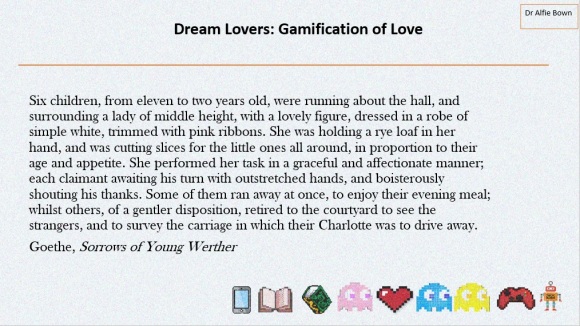
Seeking in his presentation to frame the smart city as the scene for relationships of love and desire, Alfie introduced his presentation by pointing to past representations of desire in the early Romantic literature, in which love is framed as a scene composed of objects arranged with semiotic significance in the urban environment. Unlike ‘love at first sight’, the love experienced by the narrators of Charles Baudelaire’s poetry, or Johann Wolfgang von Goethe’s The Sorrows of Young Werther, is not a single moment of encounter between a subject and their desired object, but rather ‘love at last sight’ – the broader scene in which desire is activated.


screenshot


In thinking about this scenography of desire, Alfie finds value in Roland Barthes’ work on semiotics, which examines how objects are organised into meaningful relationships that reflect wider cultural values. Alfie contended that desire in today’s digitally-mediated cities is evoked through the same process – through the arrangement of objects using interfaces, not just a singular association between subject and object of desire. Whether the desire is for a lover (e.g. Tinder, Grindr), food (e.g. Uber Eats) or something entirely fictional (e.g. Pokémon GO), the moment when this desire begins is the point at which a new relationship between the subject and implicated objects is formed – and increasingly these relationships are mediated through the digital technologies of smartphone applications, artificial intelligence (AI) and data profiling.

To illustrate his argument, Alfie presented three examples of contemporary smartphone apps that mediate this arrangement of objects using data, in an attempt to produce ‘desirable’ outcomes.

Replika is an AI chatbot that learns what the user wants in a friend by asking them a series of questions. Alfie explained that even if the user chooses to submit the bare minimum of personal information in advance, the chatbot can learn a great deal of personal information by offering the kind of helpful conversation that a supportive friend would provide, “a space where you can safely share your thoughts, feelings, beliefs, experiences, memories, dreams”. Replika is consequently marketed as the “the AI companion who cares”.


replika


Shapr
 is an app that uses LinkedIn data to suggest connections that could be relevant to your career. Its algorithm recommends 15 people each day that you may want to connect with, which users then swipe through to determine who they are keen to meet or not. If the interest to connect is mutual, users can organise to meet each other in person through the app’s messaging system. Through this activity, the app claims to help people “find inspiration and new opportunities” and “make professional networking simple, efficient and enjoyable for everyone”.

Lastly, Serendipity is an app that alerts the user when they happen to be near another person with a similar data profile. Based on the idea that there are only six degrees of separation connecting everybody on earth, the app encourages users to meet new people and find out who you know or what you have in common, so that you will “never miss a connection again”. Among other features, the app also allows you to track friends you are meeting with (if they are late), or those who are part of your group (if they are lost). All that is required for these services is for users to import all their contacts, and the app will do the rest.

These three apps, Alfie suggested, demonstrate the close interrelationship between objects of various forms that are represented through interfaces, and the desires that manifest in urban life today – for companionship and personal support, for making relevant professional contacts, and for expanding your network of friends and acquaintances.

While none of the outcomes of these three apps may seem particularly concerning at face value, Alfie warned that the purposes of digital media like these can easily expand beyond modelling and predicting user characteristics and actions, to actively manipulating their behaviours. While working in Hangzhou in eastern China, Alfie learned about the development of AI cars powered by Alibaba’s big data lab City Brain, which can respond to passenger needs. Not only do the cars use data generated by the user’s patterns of behaviour and language to tell you when you are hungry, but they can tell you exactly what you want to eat, taking you directly to the food outlet serving what you desire. This is an example of smart technology directly changing how users navigate the city and, most disturbingly, in a way that actively benefits one corporation over another.

Smart technology changing how we navigate the city is not a trend restricted to China’s smart cities. Alfie explained that Transport for London already has the technology to monitor where and when people are gathering, and could use these algorithms, and the data generated by passengers, to direct people along different routes using their journey planning services. Beyond applications that aim to move people more efficiently across the city, this technology could effectively play a role in, for example, preventing people from joining a political protest.

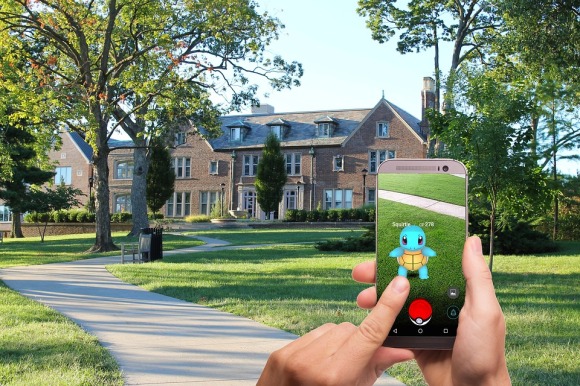
Elsewhere, manipulation of movement has entered the sphere of leisure activities. Alfie was in Hong Kong during the summer of 2016 when the hugely popular mobile game, Pokémon GO, was released worldwide. One Pokémon that was especially rare in those early months, Porygon, could only be obtained by visiting one particular shopping mall in the territory. With catching all the available Pokémon being one of the principal aims of the game, this meant that players were guided through the gameplay towards certain sites of consumption. Across many countries, this trend linking the mobile gameplay with locations of consumption has manifested through Pokéstops – in-game sites mapped onto physical landmarks where players can receive items in Pokémon GO – being sponsored by companies such as McDonald’s and Starbucks.


Trees Street Pokemon Game House Pokemon Go Lawn


Through these different examples, Alfie aimed to demonstrate how three seemingly disparate desires of contemporary urban life – Pokémon, food and lovers – all share the same qualities algorithmically and conceptually, in that the interfaces through which these desires are mediated can be structurally organised in ways that are open to manipulation, particularly when it comes to how people navigate cities. What makes this risk even more prevalent is that people today often implicitly trust digital services and big data to make the best choices for them.

Alfie struck a different chord at the conclusion of his presentation, however, by indicating that there are possibilities for resisting and subverting the algorithmic manipulation of desire. In another Chinese city, Shenzhen, where Pokémon GO is banned (as it is across the mainland), people with the technological know-how have found a way to play the game by layering the in-game map of New York – a city whose streets share a similar grid layout – on top of the map of Shenzhen. Due to the inevitable differences between the street layouts, players would embrace methods of navigating the city that are socially unacceptable and on occasions dangerous: reaching particular Pokémon spawns and Pokéstops by climbing over fences, walls and train tracks, alongside other forms of trespass.

Perhaps, then, there are still opportunities for desire to be harnessed as a tool for asserting what we individually or collectively want in our increasingly digitally-mediated cities.

We would like to thank Alfie for sharing his path-breaking research with a geographical audience, and for helping to continue the strong relationship between the Geography and Media Arts departments at Royal Holloway.

This post is Part 1 of a three-part series based on The Digital Libinal City session. Part 2 will feature Jack Lowe’s response to Alfie’s presentation, which focused on the relationships between digital technologies and everyday urban experience, particularly in the form of video games and apps. Part 3 concludes the series with Megan Harvey’s discussion of the psychoanalytic dimensions of desire and its relationship with capitalist reproduction, dreamwork and subversion in the digital sphere.


Monday, 25 February 2019

Landscape Surgery: Photography and Urban Change

This post was originally published  on the Landscape Surgery blog of the Social, Cultural and Historical Geography Research Group in the Department of Geography at Royal Holloway, University of London. Landscape Surgery is a fortnightly seminar series that the SCHG hosts during term-time. Sessions are typically organised around a theme for which speakers (including external invitees) talk about their research, followed by questions/general discussion on the topic; though it can also include workshops and research training sessions. I attend the sessions as part of my PhD activities, and am one of four editors of the Landscape Surgery blog.

The session discussed in this post was organised around the theme of 'Photography and Urban Change'. I co-wrote and edited this piece with Alice Reynolds, another PhD student in the Department of Geography at RHUL.

--------------------------------

Our second Landscape Surgery of 2019, titled ‘Photography and Urban Change’, was convened by Katherine Stansfeld, a PhD student in the Department of Geography at Royal Holloway. We were delighted to be joined by two guest speakers: Dr. Geoff DeVerteuil, a Lecturer of Social Geography at the School of Geography and Planning at Cardiff University, and Gill Golding, an urban photographer and Visiting Research Fellow at Goldsmiths, University of London. Dr. Oli Mould, lecturer in Human Geography in the Department of Geography at Royal Holloway, responded to the two speakers as a discussant and encouraged further discussion from the rest of the room.

To commence the session, Katherine presented a screen capture video of her navigating the Woodbury Down Estate in Hackney, London, using Google Street View. When moving around the site, the views shown in the video changed drastically, as the Street View platform had stitched together images taken at different stages of the estate’s recent redevelopment. Katherine used the video to express the ambivalent relationship of visual technologies such as Google Maps towards urban change, asking the group to question what this means for the (re)production of spaces, and why it is important to document and engage with our changing cityscapes – a point which remained at the heart of later discussion.

The session moved swiftly to our first guest speaker, Dr. Geoff DeVerteuil, whose presentation was entitled ‘Visualizing the urban via polarized landscapes’. In the study of photography and urban change, Geoff proposed a critical and constructive visual approach, suggesting that we must not avoid the visual or take it for granted, as geographers have in the past (Rose, 2003; Driver, 2003), but think critically around visual data. For Geoff, images begin the conversation, not end it.  And indeed, in thinking beyond simply ‘what can be seen’, the urban visual is also about the invisible; that which hides in plain sight. The aim with Geoff’s photographic projects has been to start conversations, document and expose, raise questions and challenge assumptions through visual methods – a need that he claimed is greater than ever in the ‘Instagram’ era of today’s society.

Geoff’s work adopts a range of visual methods based on 25 years of photographing cities and their increasingly unequal and polarized landscapes, which he recognises as a form of ‘slow research’. This is a purposeful reaction to the current state of urban studies, Geoff’s disciplinary background, which he contends is characterised both by conceptual overreach and empirical modesty. For example, in response to the prevalence of theory deriving from the Global North in understanding cities, Geoff has curated carefully-selected picture collections from his portfolio that blur images from cities in the Global North and South. By highlighting their similarities as much as their differences, these collections illuminate how cities often do not adhere to Northern conceptions of urban life as much as scholars tend to believe.

Another interest of Geoff’s is in using image-driven methods to explore the landscapes of power that exist within what he calls urban ‘backwaters’. In his presentation, this centred on photographs that document processes of forgetting and remembering: such as African-American graveyards in the US that have become overgrown and untended, or the placing of painted bicycles in locations where cyclists have been killed on roads in European and North American cities. Linking these image collections with his interest in making the invisible visible, Geoff also presented photographs that seek to highlight the hidden labour that takes place in cities across the world – from people waiting for work, shoe shining and recycling in Global South cities, to window-washers on skyscrapers in Canary Wharf.

The final part of Geoff’s presentation considered photographs that engage directly with processes of urban change: images of the interstitial. In this regard, Geoff’s work makes particular use of time-series and juxtaposition. For the former, this has included images that document processes of redevelopment rather than the commonplace fetishization of urban decline; while elsewhere Geoff has photographed time-series where seemingly nothing has changed within the space of a year or multiple years.

For the latter, Geoff’s juxtapositions have studied the relationships between ‘power landscape’ and ‘backwater’, fixed and mobile in cities. In one particular example, Geoff illustrated this tension with a photograph of a large plane flying low over a nearby residential area close to Heathrow, which is under threat from the airport’s potential expansion. In the Global South, Geoff has explored the same tensions by photographing informal settlements, such as shanty towns, that are situated within a stone’s throw of skyscrapers that tower behind them.

Geoff presenting a photograph of the ‘gentrifying edge’, another of his juxtapositions, exposing the borderlines of urban redevelopment

Poignantly, Geoff finished by presenting photographs he had taken of Grenfell Tower after the June 2017 fire. Situated in the Royal Borough of Kensington and Chelsea, Geoff’s juxtaposition of the burnt skeleton of Grenfell Tower amidst a background of newly-built buildings illustrated the stark inequalities prevalent in processes of urban change.

Ultimately, Geoff intends to use his photography as a catalyst to continue conversations around visual urbanism as a way of doing research – of how to approach current debates in urban studies from a less distant and desktop approach, and visual methods from a more infused urban theoretical background.

Following Geoff’s presentation, our second invited speaker was Gill Golding. Her presentation discussed the process of making Welcome to the Fake, a series of photographs focusing on the recent redevelopment of King’s Cross in London, and its wider significance for diversity in spaces of urban regeneration.

Having taught in the King’s Cross area in the 70s, when it had a reputation for crime, dereliction and poverty, Gill was shocked to see the extent of change when she returned to London in 2012, and later in 2016. Describing what she witnessed as somehow lacking in reality, she began employing what she calls her ‘ground-based approach’ to photography: walking copiously in the locality over a long period of time, before eventually taking photographs that spoke to her experience of inhabiting environments that felt ‘simulated’.

In stark contrast to the deprivation Gill recounted from a few decades ago, King’s Cross is now being marketed as London’s ‘hottest’ area – a vibrant hub for young professionals and creatives, supported by a host of brands that people typically associate with wealth. This is evident from the types of hoardings that surround the site. Gill explained that she often photographs hoardings because they tell you a great deal about imagination – how we envision places to be. These imaginations can be derived from the use of language, with words such as ‘unique’ implying a certain exclusivity – that you are ‘special’ in some way for being there – but also in how people are represented in their images. In this case, the hoardings depicted mainly white, younger people; but most strikingly for Gill, she remarked that you never see images of young people just ‘hanging out’. They were always doing something purposeful, as if their presence in the space were tightly choreographed, contributing to the sense of unreality that Gill detected from walking around the development.

As an artist, Gill’s response to this feeling was to take photos that mimicked the simulated images the developers displayed on hoardings at King’s Cross, such that they were effectively indistinguishable from the site’s promotional material. This took no small effort on her part. She had to wait a long time for moments when just the right number of people occupied the space, all behaving ‘appropriately’ in the manner you would expect to see in approved images of the development – walking calmly through the space, using street furniture, on-site businesses and amenities, and not doing anything to contradict the intended purposes of the space.

View Gill’s photographs for Welcome to the Fake here.

Through this process, Gill’s photographs demonstrated how the regenerated spaces of King’s Cross really do operate in the ways that their developers imagined – which is to say, in a highly choreographed, ordered and functional manner that leaves little room for behaviours and events that deviate from the simulations.

Asserting that cities are characterised by spaces of surprise and spontaneity, Gill claimed that the redeveloped areas of King’s Cross are, in contrast, spaces characterised by micromanagement. Being privately-owned spaces, security employees are always on-hand to keep the ‘wrong’ type of people out; the water fountains shoot water in highly coordinated patterns; the architecture is bland and uninspiring; the trees are manicured with precision; and even the grass is fake. The entertainments provided in the ‘public’ areas of the development are carefully vetted, whether it is live acts or televised films and events being shown on big screens. In line with the world portrayed on the hoardings, these really aren’t spaces where young people feel they can just hang out – and all of this has significant implications for diversity in what is one of London’s most diverse boroughs. For ultimately, what types of entertainment are shown and what behaviours are allowed say a lot about how welcoming the site’s spaces are to different kinds of people.

Gill concluded her presentation by arguing that gentrification, following Anna Minton (2017), is not a strong enough word to describe the nature of urban change that is taking place at locations such as King’s Cross. It is a transformation marked by inequality and socio-spatial polarisation, pervasive and undemocratic control by private corporations, a lack of social diversity, and a choreography of the space that is fundamentally different from the spontaneity we typically associate with urban public spaces.

Following the presentations from Geoff and Gill, Dr. Oli Mould responded to the two speakers as a discussant.

Oli began his discussion by using Henri Lefebvre’s (1991) triad of the production of space as a framework for thinking about the presenters’ work on urban photography: representations of space, representational spaces and spatial practices. In Geoff and Gill’s talks, Oli suggested, representations of space denote the ways that the city is visualised; particularly the ‘utopian’ simulated images that create certain imaginations of the city, such as those appearing on the hoardings described by Gill. Representational spaces of urban photography are the surfaces that we project such images onto. The two presentations drew particular attention to the borders and barriers between different zones of development, such as Geoff’s juxtapositions, and the boundaries between what is visible and invisible. As Gill’s discussion of the diversity portrayed in redevelopment imagery highlights, photography can both reveal and mask the power relationships that shape urban landscapes. Lastly, spatial practices here referred to creative acts of photography and the materialities associated with these practices, such as the technologies used to produce the images, or the particular methods undertaken as part of the process.

Oli using the whiteboard to explain Henri Lefebvre’s triad of the production of space

With this theoretical approach in mind, what can Geoff and Gill’s visual work help us to understand about how urban space is (re)produced?

What Oli gleaned from their presentations was the ability of photography to bring the unknowable to the fore; finding creative ways to illustrate how certain spaces are produced through interrelationships of distinct representations of space, representational spaces and spatial practices that are not always obvious to us. Yet Oli also warned that we are experiencing the loss of the right to create the city in this way, especially through the fetishization of the urban image. Connecting to Gillian Rose’s talk in Egham the day before this session on ‘seeing the city in digital times’, he remarked upon the proliferation of urban images as a result of digital media, which have enabled us to create and share photographs instantaneously and en masse. The images we produce on a daily basis can easily get lost in the overwhelming quantity of visual data communicated digitally, meaning that the political power of taking a photograph has become more difficult to extract. For example, images of homeless people have become canon in urban photography, and this expectation has served to normalise the occurrence of homelessness in cities.

The challenge that Oli identifies for urban photography, then, is to find ways to reclaim the emancipatory potential of urban photo-taking. In what ways might photography enact a democratic method of engaging with the city, and what possibilities could this entail for urban futures?

We’d like to thank our two presenters Geoff and Gill for sharing their innovative and important work with us, and Oli Mould for directing what was a lively and insightful discussion, delving into the possibilities and pitfalls of photography as both a method and object of study for making sense of urban change.

References

Driver, F. (2003) “On Geography as a Visual Discipline” Antipode: A Radical Journal of Geography35(2): 227-231.

Lefebvre, H. (1991) The Production of Space. Oxford: Blackwell.

Minton, A. (2017) Big Capital: Who’s London For?. London: Penguin.

Rose, G. (2003) “On the Need to Ask How, Exactly, Is Geography “Visual”?” Antipode: A Radical Journal of Geography 35(2): 212-221.


Sunday, 30 December 2018

Landscape Surgery: Curating the Oslo Architecture Triennale

I originally wrote and published this post on the Landscape Surgery blog of the Social, Cultural and Historical Geography Research Group in the Department of Geography at Royal Holloway, University of London. Landscape Surgery is a fortnightly seminar series that the SCHG hosts during term-time. Sessions are typically organised around a theme for which speakers (including external invitees) talk about their research, followed by questions/general discussion on the topic; though it can also include workshops and research training sessions. I attend the sessions as part of my PhD activities, and am one of four editors of the Landscape Surgery blog.

The session discussed in this post was organised around the theme of 'Curating the Oslo Architecture Triennale', with a joint presentation by two of the curators of this event's upcoming iteration in 2019. Thanks to Alice Reynolds and Megan Harvey for editing this post.

------------------------------------------------

For our final Landscape Surgery session of this term we welcomed Cecilie Sachs Olsen, a British Academy post-doctoral research fellow at Royal Holloway’s Centre for the GeoHumanities, alongside Matthew Dalziel, an associate of the transdisciplinary architecture and engineering practice Interrobang, as two of the four-person curatorial team for next year’s Oslo Architecture Triennale.

Taking place from 26th September to 24th November 2019, this event is the Nordic region’s biggest festival of architecture, and an internationally-important arena for discussion around the challenges of architecture and urban space. Cecilie and Matthew’s joint presentation focused on the process of curating the Triennale around their chosen theme of ‘degrowth’, the role that art and performance will play within their practice, and the challenges they’ve encountered since starting work on the Triennale programme.


Degrowth and architecture

Matthew, speaking as a practising architect himself, began the presentation by outlining how individual architects often have very little agency in the construction industry to which they contribute. Despite typically being motivated by social, cultural and artistic values, 60% of architects at any given time are working on private housing, with much of it marketed towards the wealthiest 1% of the population.

However, cultural events such as the Triennale are one outlet that architects have for more critical interventions, giving these individuals opportunities to experiment with ideas outside of a ‘project’ ecosystem, and into an arena that could potentially inspire a global conversation.

The curatorial team chose their conversation for the Oslo Architecture Triennale to be about ‘degrowth’.

Degrowth has been understood to stand for “a downscaling of production and consumption that increases human well-being and enhances ecological conditions and equity on the planet. It calls for a future where societies live within their ecological means, with open, localized economies and resources more equally distributed through new forms of democratic institutions” (Research & Degrowth, 2018). Central to this definition is the reasoning that the drive for continued economic growth in our societies is unsustainable for a world that supports life.

Many will recall that this argument has been made for decades by organisations such as The Club of Rome, whose famous report The Limits to Growth (Meadows et al., 1972) is widely recognised as one of the first significant studies that illuminated how the unprecedented economic growth occurring throughout the 20th century was causing, and would continue to cause, widespread ecological destruction.


Cecilie illustrating the arguments in The Limits to Growth with a cartoon showing a hamster gradually consuming the earth, based on the idea that a hamster doubles in size every day until it reaches puberty (author’s own)


Nonetheless, according to the presenters, reports such as The Limits to Growth failed to capture the impetus of the public and policymakers due to the tone of doomsaying that accompanied the stark environmental impacts indicated by their studies. Indeed, a continual problem confronting the degrowth movement has been the negative connotations associated with the notion of reducing economic growth, as it might seem to imply a logic of austerity.

In order to avoid this risk of scaremongering by simply offloading information to the public, the curatorial team instead wanted to use the theme of degrowth to change how people think about urban environments in a way that is relevant to their lives. And in particular, to challenge the assumption that the function of the spaces we use in everyday life is already predetermined, which is one reason why people can feel alienated from the spaces they inhabit.

According to Cecilie, this is why art and performance are so important, as they have the ability to free people from their everyday roles in society and experiment with other ways of being in the world. In theatre, for example, if a person acting as a queen sits on a normal chair, the chair becomes a throne. The pre-given conception of an object can be transformed simply by putting it in a context where re-imagination is welcomed, and the enchantment accompanying such experiences can help us to rethink the agency we have within our own surroundings.


Curating transformational spaces

This is exactly what the curatorial team is aiming to achieve in their programme for the Oslo Architecture Triennale, for which they will be creating three ‘transformations’ in three different sites in Oslo to turn them into spaces of sharing, play and connecting.

The first location is Oslo’s National Museum of Art, Architecture and Design. An institution whose buildings are made to house conventional exhibitions of art, crafts and design work, the space the team were given for the Triennale was a typically bland, concrete room.

The challenge facing the curators was to convert it into a catalytic space, and the idea they came up with was to create a library within it. Cecilie reflected that not only are libraries environments of sharing and making, but the most celebrated libraries also often have a uniquely awe-inspiring atmosphere to them. How could they construct such an effect in what was a small, rather uninspiring room?


Trinity College Library, Dublin (Skitterphoto, public domain)


In their design of the ‘library’, they were particularly inspired by Olafur Eliasson, whose work has used light, mirrors and liquids to evoke seemingly limitless spaces within physically restricted sites. At present, the curatorial team are planning to craft four mirrored rooms separated by walls of varied thicknesses, with participants moving between them to gradually transition into the imagined space of the library from the ‘real’ space of the museum building. Immersion is central to the curators’ vision of the library experience, and they are keen to employ techniques used by interactive theatre companies such as Punchdrunk, which give participants the opportunity to explore and engage with fictional environments in meaningful and believable ways, guided solely by their own interests and inclinations.


Olafur Eliasson's The Weather Project (Tate Photography, source: https://olafureliasson.net/archive/exhibition/EXH101069/the-weather-project)


This journey into the imaginary will begin from the moment visitors reach the building, where they will be given library cards to enter the space rather than museum tickets. Upon leaving the ‘library’ and re-entering Oslo city centre, participants will then be invited to extend the experience by taking part in an immersive audiowalk that zURBS, the ‘social-artistic urban laboratory’ that Cecilie co-founded in 2011, will be running.

The second transformation will take place in the urban public space of Oslo through the creation of a ‘playground’. Here, the curators will be drawing on the capacity of play to de-emphasize the urban environment’s economic value and functions and instead render them as arenas for “pleasure, surprise and critical possibility” (Dickens, 2008: 20).

Previously, play has been considered an activity that takes place in alternate realities separate from our everyday lives (sports pitches, games tables, virtual realities, etc.) where different rules apply, in what Huizinga (1955 [1950]) calls the ‘magic circle’ of play. By using public playful art to expand the magic circle spatially (beyond designated environments), temporally (beyond specific time limits) and socially (beyond designated players) (Montola, 2005), the stages of everyday life can be re-enchanted as realms of the possible (Klausen, 2014).

Through play centred around the concept of degrowth, the curatorial team wants participants to imagine opportunities for an improved way of living, rather than a reduction in individual agency that might be inferred from the term. Central to this viewpoint is the idea that non-essential activity should be understood as an enjoyable state of being, rather than something defined through the lens of economic growth as ‘unproductive’. Games don’t necessarily lead to the most efficient ways of completing a task – golf is a rather complicated way of putting a ball in a hole, for example – but negotiating the affordances games present to players in creative and skilful ways can ultimately lead to enrichment that wouldn’t occur otherwise.

The final transformation will take place in DogA, the Norwegian Centre for Design and Architecture, which will become the site of a makeshift theatre.

Here, the curators are enlisting the skills of METIS, a Cambridge-based performing arts organisation, and more specifically their interactive piece We Know Not What We May Be. Originally performed at the Barbican in September, this participatory performance asks the audience to imagine a more sustainable future, featuring talks from experts about what the future could be, and giving the audience the option to decide which one they want. These participants can then see their decisions become a reality, as the actors perform scenarios based on what has been chosen, followed by further discussion about these possibilities amongst the actors and audience.

One of the difficulties faced by the team when arranging this performance is the institutional context in which it will be set. DogA is funded by the municipal government’s budget for the economy, creating tensions between the theme of ‘degrowth’ and the continued demand for growth in Oslo’s economy today. In order to reconcile this apparent contradiction, the curators have emphasised that the performance will be focused on facilitating discussion between a wide range of people – including elites – rather than silencing points of view to further a particular political agenda.

Alongside the three transformations, as highlighted previously, Cecilie’s artist collective zURBS will be using audiowalks as a way to engage citizens and planners to think about alternative futures. These will be framed in an imaginative way. For example, in one walk participants will imagine they are researchers from the future, and will choose individually between different options of what Oslo might look like in the decades to come. Collectively, participants will then traverse the present-day environment and attempt to identify how these brave new worlds began, without knowing what futures the other walkers chose to seek.

Cecilie explained that the idea behind the audiowalks was to de-centre accepted understandings of how the city operates. By encouraging citizens to identify the transformative potential of the present city, such ‘defaults’ don’t have to exist. As soon as we’re afforded the agency to redefine what a space is for, the alternative futures we dream in our heads could become possible.


Challenges

Nonetheless, in talking about the challenges the team have faced so far throughout the curatorial process, Cecilie and Matthew accepted that there are often limits to what people are able to imagine as they think about better ways of inhabiting urban space. If the street is seen inherently as an instrument of consumption, this epistemology will mean that even seemingly beneficial changes, such as pedestrianisation, will be become tools to reproduce the dominant paradigm of consumption through processes such as gentrification.

Language is another force that imposes epistemological limitations on how the curatorial theme can be explored. Most problematically for the curators, the term ‘degrowth’ doesn’t even exist in Norwegian, meaning that they have had to think about alternative prefixes to use other than ‘de-’, while attempting to remain faithful to the understanding of degrowth that is implied when used in English. Yet even without language barriers, reaction to degrowth as a concept has frequently been ambivalent, as was highlighted in the discussion after Cecilie and Matthew’s presentation when its usefulness for societies in the Global South was questioned.

The last challenge the curators discussed was one that many academics will be familiar with: the need to be rigorous in their engagement with the material they are discussing, while also making their work accessible enough for members of the public to engage with it. This necessity was brought sharply into focus when the curators of the last Oslo Architecture Triennale were criticised for making works that ‘normal people’ couldn’t understand.

In contrast, the curatorial team’s efforts to avoid a similar fate are reflected in the participatory qualities of the installations, performances and other artworks they are curating, which give ‘normal people’ the greatest power to define and interpret what is meaningful within the installations and experiences on offer.

We’d like to offer enormous thanks to Cecilie and Matthew for taking time out of their busy schedules to talk to us about their work, and we wish them every success over the coming months as they prepare for the Oslo Architecture Triennale, which starts on 26th September 2019.


Matthew Dalziel and Cecilie Sachs Olsen (author's own)


Bibliography

Dickens, L. (2008) “‘Finders keepers’: performing the street, the gallery and the spaces in-between” Liminalities: A Journal of Performance Studies 4: 1-30.

Huizinga, J. (1955 [1950]) Homo Ludens: A Study of the Play-Element in Culture. Boston, MA: Beacon Press.

Klausen, M. (2014) “Re-enchanting the city: Hybrid space, affect and playful performance in geocaching, a location-based mobile game” Journal of Urban Cultural Studies 1(2): 193-213.

Meadows, D.H., Meadows, D.L., Randers, J., Behrens III, W.W. (1972) The Limits to Growth: A Report for the Club of Rome’s Project on the Predicament of Mankind. New York: Universe Books.

Montola, M. (2005) “Exploring the Edge of the Magic Circle: Defining Pervasive Games” Proceeedings of the Digital Arts and Culture Conference, Copenhagen, Denmark [online] Available at: http://citeseerx.ist.psu.edu/viewdoc/download;jsessionid=AB62B5B3CD2B349DE8846879B58B4AC8?doi=10.1.1.125.8421&rep=rep1&type=pdf

Research and Degrowth (2018) “Definition” Research and Degrowth [online] Available at: https://degrowth.org/definition-2/


Written by Jack Lowe, edited by Megan Harvey and Alice Reynolds